
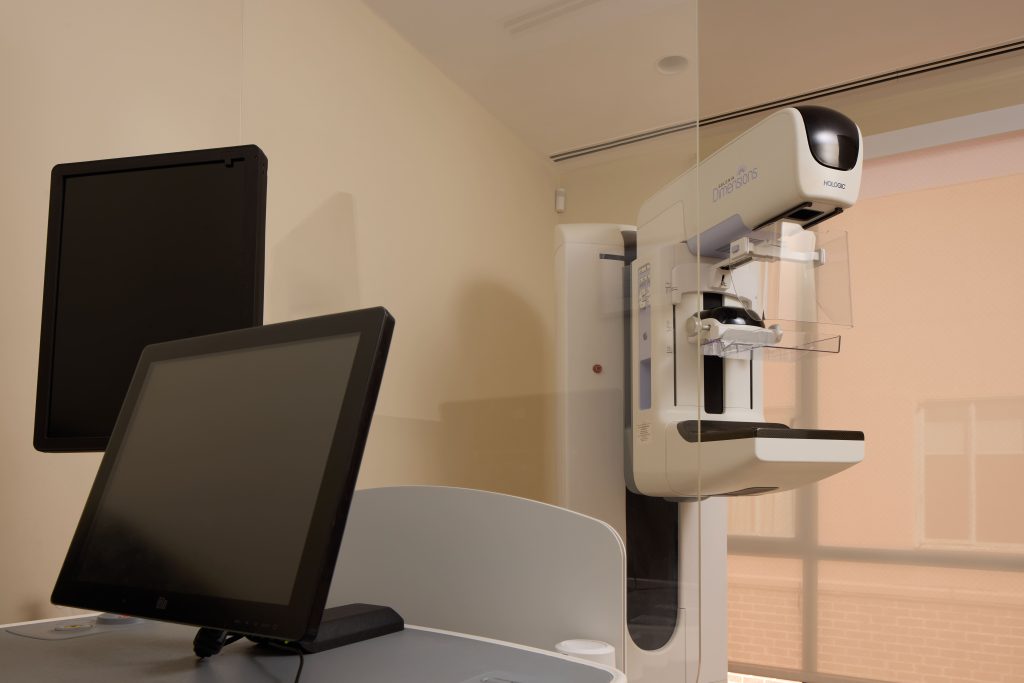
If you have ever received a mammogram report that mentions your breast density, you may have wondered what it means and whether it affects your breast health.
Breast density describes how much fibroglandular tissue, compared with fatty tissue, is visible on a mammogram. It is not related to how your breasts look or feel, and it cannot be determined through a physical breast exam. Instead, a radiologist evaluates the breast tissue on your mammogram and assigns it to one of four categories.
Understanding your breast density is an important part of understanding your mammogram results. Dense breast tissue can make some cancers more difficult to see on a mammogram, and having dense breasts is also associated with an increased risk of developing breast cancer. Here is what each of the four breast density categories means and why the distinction matters.
What Is Breast Density?
Breasts are made up of three primary tissue types: fatty tissue, fibrous tissue, and glandular tissue. Fibrous and glandular tissues appear white on a mammogram, while fatty tissue generally appears darker. Breast density refers to the proportion of fibrous and glandular tissue compared with fatty tissue. The more fibroglandular tissue present, the denser the breast is considered.
The American College of Radiology's Breast Imaging Reporting and Data System, commonly called BI-RADS, uses four categories to describe breast density:
- Almost entirely fatty
- Scattered areas of fibroglandular density
- Heterogeneously dense
- Extremely dense
Approximately 80% of women fall into one of the two middle density categories. Around 10% of women have almost entirely fatty breasts, and about 10% of women have extremely dense breasts.
Category A: Almost Entirely Fatty
In the first category, the breasts are composed almost entirely of fatty tissue, with very little fibroglandular tissue. As most of the breast appears darker on a mammogram, abnormalities that appear white are generally easier for the radiologist to see. Mammography is particularly sensitive in breasts that are almost entirely fatty.
Having breasts that are almost entirely fatty does not mean that you have no risk of developing breast cancer. Many factors, including age, family history, genetics, previous breast conditions, and other personal and medical factors influence breast cancer risk. Your breast density is only one piece of your overall breast health.
Category B: Scattered Areas of Fibroglandular Density
The second category means that most of the breast is fatty, but there are scattered areas of fibrous and glandular tissue throughout the breast. This is still considered a non-dense breast pattern. Small areas of denser tissue are normal and can be seen in different parts of the breast. Around 40% of women fall into this category.
Category C: Heterogeneously Dense
Heterogeneously dense breasts contain a substantial amount of fibroglandular tissue, although fatty tissue is still present. Dense tissue can make it harder for a radiologist to see some abnormalities on a mammogram because both dense tissue and many breast cancers appear white.
Heterogeneously dense tissue may obscure small masses, but this does not mean that a mammogram is no longer useful. Mammography remains an important part of breast cancer screening, and many cancers can still be detected on a mammogram even when breasts are dense.
For women with heterogeneously dense or extremely dense breasts, your radiologist may recommend supplemental screening based on your breast density and overall breast cancer risk. These supplemental screenings may include:
- Contrast-Enhanced Mammography: Uses contrast to highlight areas of increased blood flow that may require further evaluation.
- Breast Ultrasound: Uses sound waves to provide additional imaging of breast tissue and can help evaluate areas of concern.
- Vera Scan Breast CT: Creates a detailed, three-dimensional image of the breast without compression.
- Breast MRI: Provides highly detailed breast imaging and may be recommended for women with elevated breast cancer risk.
Category D: Extremely Dense
In this category, most of the breast is composed of fibroglandular tissue, with relatively little fatty tissue. As dense tissue and many breast abnormalities both appear white on a mammogram, the ability of mammography to detect some cancers can be reduced when the breasts are extremely dense. Extremely dense breast tissue is also associated with an increased risk of developing breast cancer compared with non-dense breast tissue.
Does Breast Density Change Over Time?
It can. Breast density can change over time due to factors including age, hormonal changes, and menopause. For many women, breast density decreases after menopause as glandular tissue is gradually replaced by fatty tissue, although the degree of change varies from person to person.
As a result, your breast density category can differ from one mammogram to the next. Comparing your current mammogram with previous imaging helps your radiologist identify changes over time.
Understanding Your Breast Density
Your breast density is determined by the radiologist who interprets your mammogram and will be included in your mammogram report. If you are unsure of your density category, review your most recent report or ask your breast imaging provider.
Knowing your breast density can help you have a more informed conversation about your breast cancer risk and screening plan. If you have dense breasts, your radiologist may recommend supplemental imaging based on your individual risk factors and screening history.
Breast density is only one factor in determining breast cancer risk. Someone with dense breasts may have an otherwise average risk, while someone with non-dense breasts may have other factors that increase their risk. Regardless of breast density, staying up to date with recommended mammograms and discussing any changes in your breast health with your healthcare provider remain important parts of breast care.
Frequently Asked Questions About Breast Density
1. If I lose weight, will my breasts become less dense?
Not necessarily. Losing weight can change the amount of fatty tissue in the breasts, but it does not necessarily change the amount of fibroglandular tissue that determines breast density. Watch our NP-C Bri explain how weight changes can affect breast density in this video.
2. Do I still need a mammogram if I have dense breasts?
Yes. Having dense breasts does not mean you should skip routine mammography. Mammograms remain the gold standard screening tool, and many cancers can still be detected in dense breasts. Depending on your individual risk factors, your provider may also discuss whether additional imaging is appropriate.
3. Can breast density change over time?
Yes. Breast density can change, particularly with age, although the degree of change varies from person to person. This is why breast density may be different from one mammogram to the next.
4. Can I tell if I have dense breasts by how my breasts feel?
No. Breast density is determined from the appearance of breast tissue on a mammogram. Dense breasts do not necessarily feel different from non-dense breasts during a physical examination.

Leave a Reply