
If you or a loved one is preparing for a lumpectomy, it's completely normal to have questions. A diagnosis or the discovery of an abnormal mass can feel overwhelming, and the weeks leading up to surgery are often filled with uncertainty. You may find yourself lying awake wondering what the procedure will feel like, how your body will look afterward, or how long it will take to get back to your normal routine. These are all completely valid things to think about, and you are far from alone in thinking them.
The good news is that a lumpectomy is one of the most commonly performed breast surgeries at Bedford Breast Center, and patients who go in feeling informed consistently report a better experience. Understanding what to expect before, during, and after your procedure makes a real difference, not just in how prepared you feel, but in how smoothly your recovery tends to go. Dr. Leslie Memsic and her team believe every patient deserves clear, honest answers. Here are three of the most common questions patients ask her.
1. What Type of Anesthesia Is Used?
For many patients, the question of anesthesia is one of the most anxiety-inducing parts of preparing for surgery. The idea of being "put under" can feel scary, which is why it helps to understand exactly what will happen and why the approach used at Bedford Breast Center is designed with your comfort in mind.
Most lumpectomies at Bedford Breast Center are performed using MAC (Monitored Anesthesia Care) combined with a local anesthetic.
MAC is a type of sedation where you are in a relaxed, sleep-like state but not fully under general anesthesia. An anesthesiologist monitors your vital signs throughout the entire procedure, adjusting your sedation level in real time to keep you comfortable and safe. When combined with a local anesthetic injected directly into the surgical area, the procedure is completely painless. You won't feel a thing.
This approach comes with some significant advantages over traditional general anesthesia:
- No paralytic medications: your body isn't chemically paralyzed, which reduces stress on your system
- No tracheal tube: there's no breathing tube placed down your throat, meaning less discomfort and no sore throat after surgery
- Faster recovery: because your body isn't processing heavy general anesthesia, you wake up more quickly and can often go home sooner
If the idea of general anesthesia has ever made you nervous, you're not alone. With MAC, you are deeply relaxed and completely unaware of the procedure, but your body is doing much less work to recover from the sedation itself. Most patients are alert and oriented within a short time after the procedure ends, and many are surprised by how quickly they feel like themselves again. If you have had a difficult experience with general anesthesia in the past, or if the idea of heavy sedation has been a source of worry, this is a great topic to bring up with your Bedford Breast Center provider before your procedure. They are happy to walk you through exactly what to expect and address any concerns you may have.
2. Can I Shower or Use Deodorant Before and After Surgery?
Yes, and this surprises a lot of patients!
Many people assume they need to avoid showering or using deodorant before surgery because they've been told to skip these products before a mammogram. That instruction exists for a specific reason: certain ingredients in deodorants and lotions can show up as artifacts on mammogram images, which can interfere with accurate readings. But a lumpectomy is a surgical procedure, not an imaging study, and the rules are different.
Maintaining your normal hygiene routine before surgery is not only allowed, it can actually help you feel calmer and more like yourself on what can otherwise be a nerve-wracking morning. You are generally allowed to shower and use deodorant before your procedure. Once you arrive and are prepped for surgery, the breast area will be thoroughly cleaned by the surgical team to ensure a safe, sterile environment. So there's no need to skip your normal hygiene routine beforehand.
After surgery, patients are often pleasantly surprised by how soon they can return to normal hygiene habits. The incision site does require some care and attention in the days following your procedure, and your surgical team will give you clear, specific instructions about how to keep the area clean without disrupting the healing process. For most patients, this is far less complicated than they anticipated. If you have any questions about specific products, water temperature, or how to care for the incision area while bathing, don't hesitate to ask your care team. Your team may also recommend some post-operative recovery treatments that will support your body as it heals, from Indiba Radiofrequency to Hyperbaric Oxygen Therapy.
3. Will I Need New Bras After Surgery?
This is a practical question that comes up more often than you might expect. Many patients worry that a lumpectomy will require them to invest in special post-surgical garments for an extended period of time. The reality is much simpler.
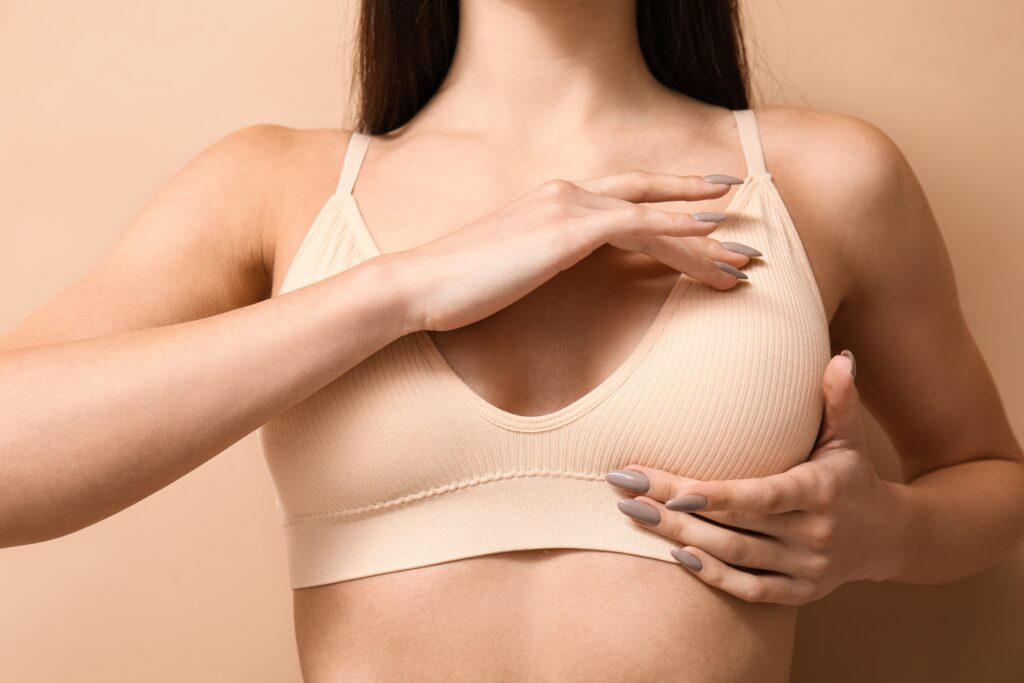
Most patients can continue wearing their regular bras after a lumpectomy. If you prefer a little extra support during recovery, a comfortable sports bra is a great option, just make sure it feels supportive without putting direct pressure on the incision site.
Immediately following surgery, your care team may place a surgical bra on you before you even leave the operating room. In some cases, ACE wraps may be used instead. These are elastic compression bandages wrapped around the chest area to provide gentle, even pressure to the surgical site.
Compression serves several important purposes during early recovery:
- Reduces swelling by preventing fluid from pooling in the tissue
- Minimizes bruising by providing consistent pressure to the area
- Supports healing by keeping the tissue stable and protected
- Increases comfort by reducing movement around the incision site
It's important to know that the compression phase is temporary. As the days pass and your incision begins to heal, you'll gradually need less external support. Whether your team uses a surgical bra or ACE wraps, the goal is the same: to keep you comfortable as your body heals. After the initial recovery period, most patients find they don't need to make any permanent changes to their wardrobe at all.
Knowledge is a Part of Your Care
The weeks before a lumpectomy can feel like a lot to process, but you don't have to figure it out on your own. It's completely normal to think of new questions in the days leading up to your procedure, whether they're about what to bring, what to expect when you wake up, or how to care for yourself once you're home. No concern is too minor to bring up with your care team. Dr. Memsic and the team at Bedford Breast Center are experienced in guiding patients through every stage of this process, from the first appointment all the way through recovery. Whatever questions are still on your mind, they are worth asking. Reach out before your procedure date and go into surgery feeling as prepared, informed, and confident as possible.
More Commonly Asked Questions
1. How long does a lumpectomy procedure typically take?
A lumpectomy is generally a short outpatient procedure, often taking between one and two hours from start to finish, depending on the complexity of the case. Because MAC anesthesia is used at Bedford Breast Center rather than full general anesthesia, patients typically recover quickly and are able to go home the same day.
2. How long do I have to wear ACE wraps after surgery?
Most patients wear ACE wraps or a surgical bra continuously for the first few days following their lumpectomy, removing them only to shower once your care team gives you the go-ahead. After that initial period, your surgeon will advise you on when you can transition to a regular or supportive bra. Every patient heals at a different pace, so your care team will give you a timeline specific to your recovery.
3. Do I need someone to drive me home after MAC anesthesia?
Yes. Even though MAC anesthesia is lighter than full general anesthesia and most patients feel alert relatively quickly after their procedure, you will still need a trusted friend or family member to drive you home. The sedation affects your reflexes and judgment in ways that can linger even after you feel like yourself again, making it unsafe to drive. Plan to have someone with you for the ride home.

Leave a Reply