
Bedford Breast Center
436 N Bedford Dr, Ste 308
Beverly Hills, CA 90210
Phone: (310) 278-8590
Monday – Friday: 9 a.m.– 5 p.m.
How to Perform a Breast Self-Exam
Mammograms can detect cancer before you can feel a lump, but breast self-exams familiarize you with how your breasts look and feel so you can alert your healthcare professional to any changes.
Forty percent of diagnosed breast cancers are first detected by women who feel a lump. At Bedford Breast Center, we recommend monthly breast self-exams for all our Los Angeles, Beverly Hills, Santa Monica, Glendale, and Malibu-area patients as a valuable way to detect changes early.
Get to know how your breasts normally look and feel.
Getting to know how your breasts usually look and feel can help you notice when something changes. This is called “Knowing Your Normal,” and a breast self-exam is one way to practice it. The guide below walks you through what to look for and when to seek care.
A self-exam can help you notice changes, but it cannot tell you whether a change is cancer. Continue with mammograms and other screening your healthcare provider recommends.
How to check your breasts
Use these steps to become more familiar with your breasts. If you’re unsure how much pressure to use or what you’re feeling, your healthcare provider can show you how to check.
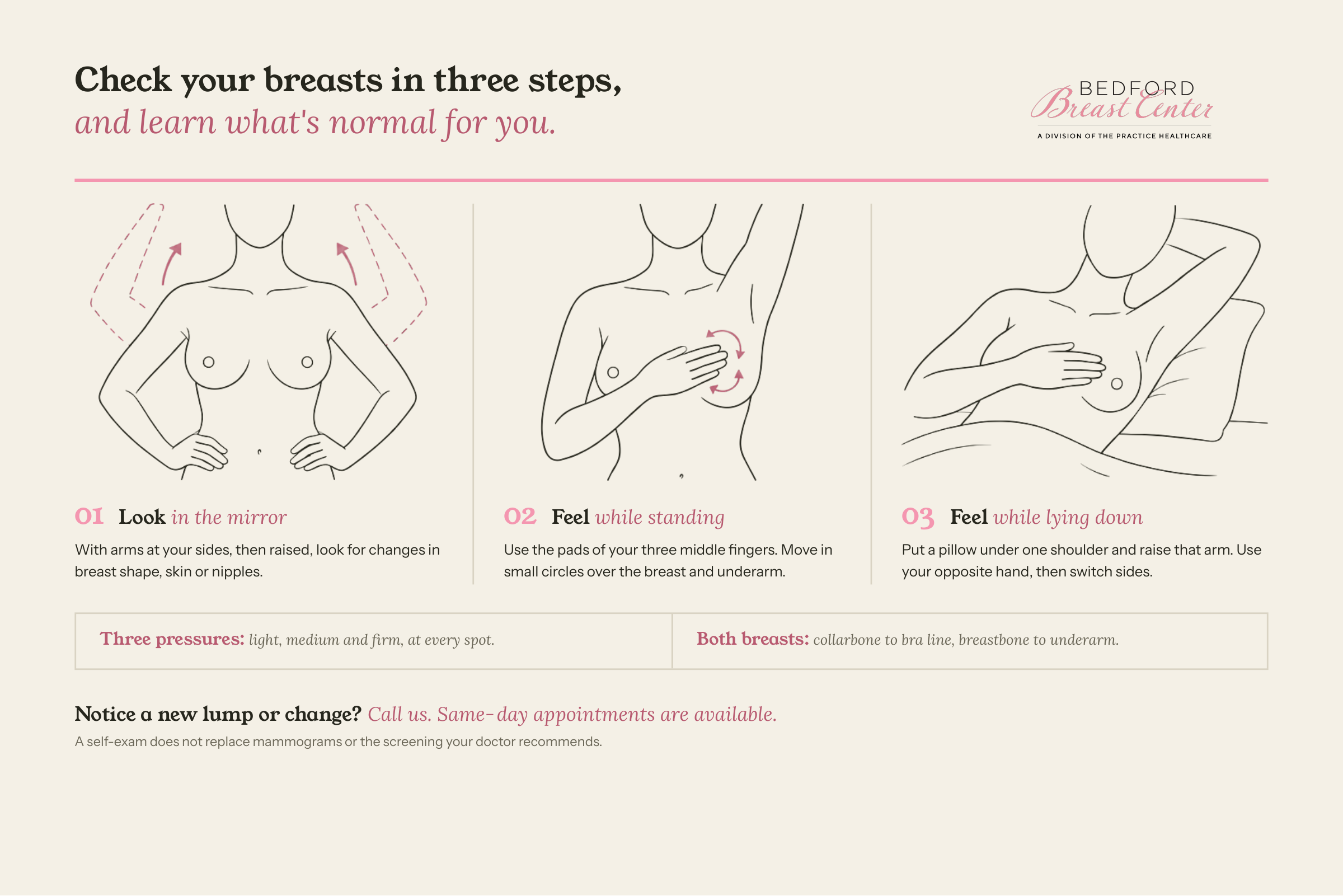
1. Look in the mirror
Start by undressing from the waist up and standing in front of a mirror. Look at your breasts with your arms resting at your sides, then raise your arms overhead and look again.
Look for changes in the shape or size of your breasts, the skin, or the nipples. Your breasts don’t need to look identical—the important thing is whether something looks different from what’s usual for you.
2. Feel while standing or sitting
Raise one arm and use the pads of the three middle fingers on your opposite hand to check that breast.
With your fingers together, make small circles as you move across the breast. Following a consistent pattern, such as rows moving up and down, can help you cover the whole area.
Check from your collarbone to below your breast, and from your breastbone to your underarm. Use light, medium, and firm pressure to feel different tissue depths, keeping your touch gentle enough that it doesn’t hurt.
Repeat on the other breast. If it feels easier to move your fingers over wet skin, you can do this part in the shower.
3. Feel while lying down
Lie on your back with a pillow under one shoulder and raise the arm on that side above your head.
Using your opposite hand, check the breast and underarm with the same small circles and light, medium, and firm pressure. Then move the pillow to the other shoulder and repeat on the other side.
This position spreads the breast tissue across your chest, which may make it easier to feel.
Need additional guidance? Our team can walk you through a self-exam and answer your questions. Schedule a visit.

3 Simple Tips to Perform a Breast Self-Exam!

A Guide to Breast Self-Exams with Dr. Heather Richardson
Here’s How to Give Yourself a Self-Ecam
Here’s How To Perform a Self Breast Exam in 3 Easy Steps!

Real Housewives of Beverly Hills’ Kyle Richards Explains How to Perform a Proper Breast Self-Exam
How to Give Yourself a Breast Exam

Ep 2: Breast Density Debunked – What does Breast Density Look Like?
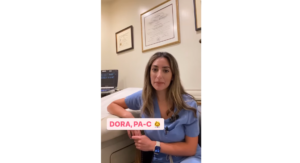
Self-Breast Exams!
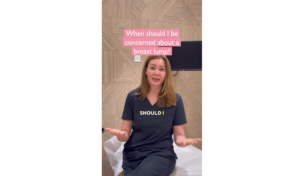
When Should I Be Concerned About A Breast Lump?

One Breast Is Bigger Than The Other. Is This Normal?
Ep 1: Breast Density Debunked – What is Breast Density?

3 Simple Ways to Perform a Breast Self-Exam! ????


What changes should I report?
Let your healthcare provider know if you notice any of the following:
- A new lump or thickened area in your breast or underarm.
- A new change in breast size or shape or swelling.
- Skin dimpling, puckering, or an orange-peel texture.
- A nipple that has newly turned inward.
- Nipple discharge other than breast milk.
- Red, flaky, or thickened skin on the breast or nipple.
- New breast or nipple pain, especially if it persists.
Many breast changes have causes other than cancer. An evaluation can help you understand what’s causing the change and whether you need any further care.
A lump’s texture or tenderness alone cannot tell you whether it is cancer. New lumps should be checked, whether they feel soft or firm, painful or painless.
Noticed something different? You don’t have to figure out what it means on your own. We’re here to listen and help you understand the next step. Request an evaluation.
How often should I check?
You don’t need a strict schedule to practice breast self-awareness. Simply paying attention to your breasts while bathing, dressing, or looking in the mirror can help you become familiar with what’s usual for you.
For a more structured check, perform the breast self-exam steps noted above once a month. This applies to women of all ages and is especially important for women in their 20s and 30s who are not yet undergoing regular mammography screenings.
If you have periods, you may find checking more comfortable a few days after your period starts, when your breasts are often less tender.
Whenever you notice a new change, contact your healthcare provider rather than waiting for your next check.
What happens if I find something?
When you contact your healthcare provider, explain what you noticed, where it is, and when you first noticed it. You don’t need to know what the change means before asking for help.
At your appointment, your clinician will discuss your symptoms and health history, then examine the area. They may recommend an ultrasound or diagnostic mammogram for a closer look. In some cases, a biopsy, a small tissue sample examined in a lab, is needed to understand the finding.
Before you leave, ask what happens next and when you should follow up. You should feel clear about the plan and whom to contact with questions.
Do I still need mammograms if everything feels normal?
Yes. Mammograms can detect breast cancer before a lump is large enough to feel, so screening is still important even when you haven’t noticed any changes.
The right screening plan for you depends on your age, health history, family history, and other risk factors. Your healthcare provider can help you understand when to start and how often to be screened.
Our partnership with The Breasties
Bedford Breast Center is proud to partner with The Breasties to support education and awareness. Their Know Your Normal campaign encourages you to become familiar with your body and speak up when something changes. Explore their guide for practical tips on breast and gynecologic health awareness.
Have a question or noticed a change?
If you’ve noticed a change or have a question about your breast health, we’re here to help. Contact Bedford Breast Center to request an evaluation or talk with our team about the next step.
Call (310) 278-8590
